

Build with Lux, today
Go to Lux SDK

Lux


2025 OpenAGI Labs


Automated enterprise workflows
With Lux, possibilities are endless.
Here are few examples to get you started. Remix, extend, or turn them into something new.


Competitive Market Intelligence
Manual price tracking is too slow for modern markets. Lux autonomously monitors competitor inventory and pricing trends across third-party marketplaces, feeding real-time data into your pricing strategy.
Try now
Autonomous Quality Assurance
Bottlenecks in manual testing slow down deployment. Lux acts as an always-on QA engineer, navigating your application to validate user flows and catch regressions before they reach production.
Try now

Financial Data Aggregation
Research analysts spend hours gathering data from disparate portals. Lux navigates complex financial sites to extract regulatory filings and insider activity, instantly syncing critical risk data to your internal dashboards.
Try now
For Developers
Spin up your first computer use project in 20 minutes
Lux comes in three modes, giving you control over its depth, speed, and style of execution.
Strictly follows step-by-step instructions, with ultra-stable, controllable execution
Tasker

Ideal for immediate tasks, completing actions at near-instant speed
Actor
Understands vague, complex goals, performing hour-long executions
Thinker
Try our developer-friendly SDKs, frameworks, and UX template - all wired into Lux, a state-of-the-art computer use model.
Take me to Lux SDK
Join our Discord

For ENTERPRISE
Deploy Lux across your production workflows
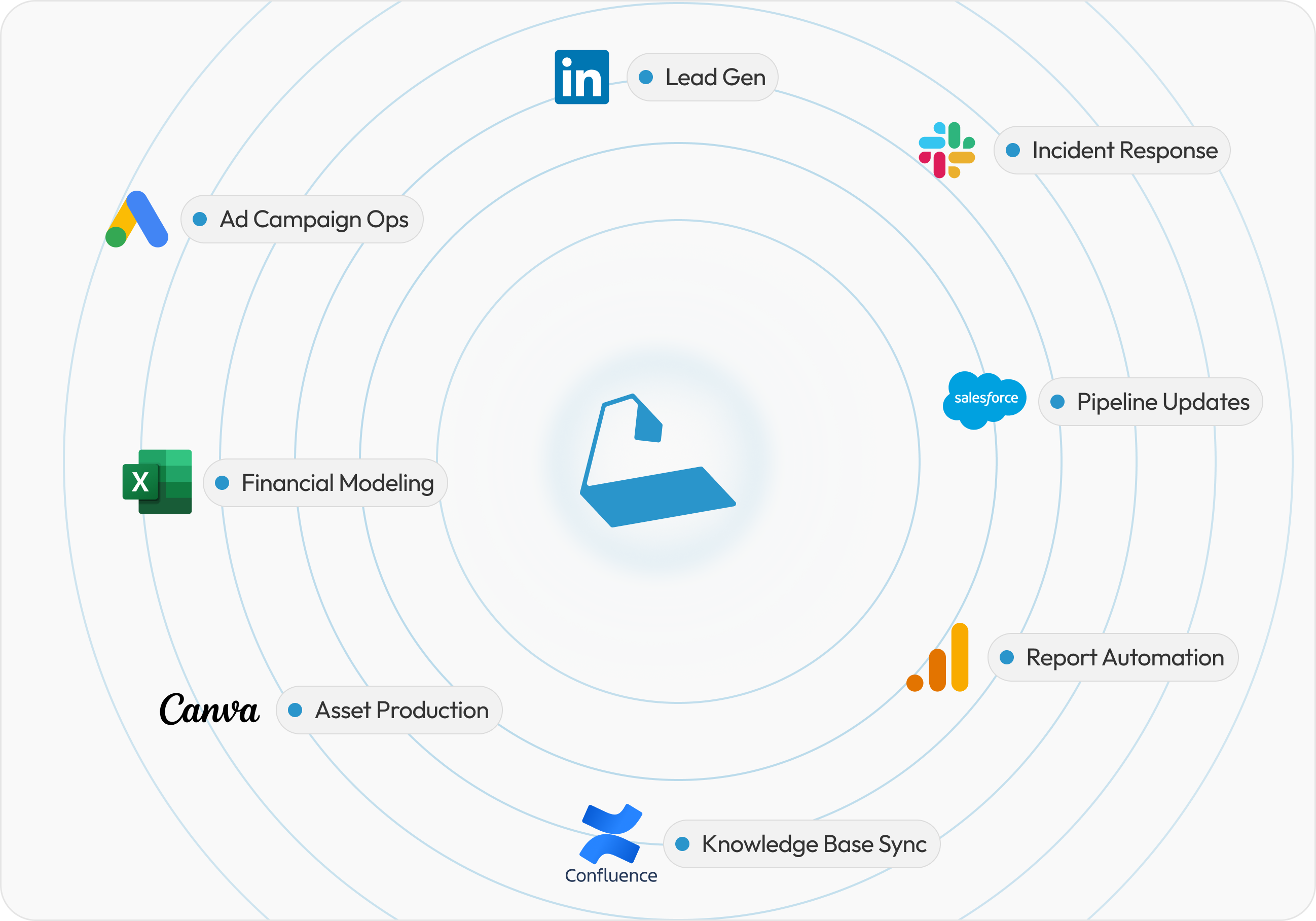
Use Lux to run and manage automated workflows across your organization, with full visibility and control.
Operationalize Lux at Scale
Deploy Lux to automate your internal tools with absolute precision. Cut overhead, eliminate errors, and scale your workflows securely.
View Enterprise Solutions
A new paradigm
Computer Use (noun.)

1. AI’s ability to operate human-facing software - boosting your gameplay, navigating dashboards, entering accurate data - not just through APIs, but also operating computers natively, just as human users do.

2. A paradigm shift in what AI can do - not just generating, reasoning, or researching - but operating on your computer.

3. Once a secret weapon of big labs - now an accessible skillset for developers everywhere.
Blog
Fresh from the lab
Notes, experiments, and strange discoveries while building the most advanced model
Current agent evals are broken: here is how OpenAGI builds scalable, diverse, and reliable evals for its computer-use models
Read Post
Now Is a Great Time to Build Computer Use Agents. Why?
Read Post

Introducing Lux, the State-of-the-Art Foundation Computer-Use Model
Read Post

A computer use love letter to developers
OpenAGI’s Lux - a state-of-the-art computer use model and developer toolkit
Lux is asked to manage communication for the next 2 hours
Check our Enterprise Solutions


Build with Lux, today
Go to Lux SDK
Lux


2025 OpenAGI Labs


Automated enterprise workflows
With Lux, possibilities are endless.
Here are few examples to get you started. Remix, extend, or turn them into something new.
Competitive Market Intelligence
Manual price tracking is too slow for modern markets. Lux autonomously monitors competitor inventory and pricing trends across third-party marketplaces, feeding real-time data into your pricing strategy.
Try now
Autonomous Quality Assurance
Bottlenecks in manual testing slow down deployment. Lux acts as an always-on QA engineer, navigating your application to validate user flows and catch regressions before they reach production.
Try now
Financial Data Aggregation
Research analysts spend hours gathering data from disparate portals. Lux navigates complex financial sites to extract regulatory filings and insider activity, instantly syncing critical risk data to your internal dashboards.
Try now
For Developers
Spin up your first computer use project in 20 minutes
Lux comes in three modes, giving you control over its depth, speed, and style of execution.
Strictly follows step-by-step instructions, with ultra-stable, controllable execution
Tasker
Ideal for immediate tasks, completing actions at near-instant speed
Actor
Understands vague, complex goals, performing hour-long executions
Thinker
Try our developer-friendly SDKs, frameworks, and UX template - all wired into Lux, a state-of-the-art computer use model.
Take me to Lux SDK
Join our Discord
For ENTERPRISE
Deploy Lux across your production workflows
Use Lux to run and manage automated workflows across your organization, with full visibility and control.
Operationalize Lux at Scale
Deploy Lux to automate your internal tools with absolute precision. Cut overhead, eliminate errors, and scale your workflows securely.
View Enterprise Solutions
A new paradigm
Computer Use (noun.)
1. AI’s ability to operate human-facing software - boosting your gameplay, navigating dashboards, entering accurate data - not just through APIs, but also operating computers natively, just as human users do.
2. A paradigm shift in what AI can do - not just generating, reasoning, or researching - but operating on your computer.

3. Once a secret weapon of big labs - now an accessible skillset for developers everywhere.
Blog
Fresh from the lab
Notes, experiments, and strange discoveries while building the most advanced model
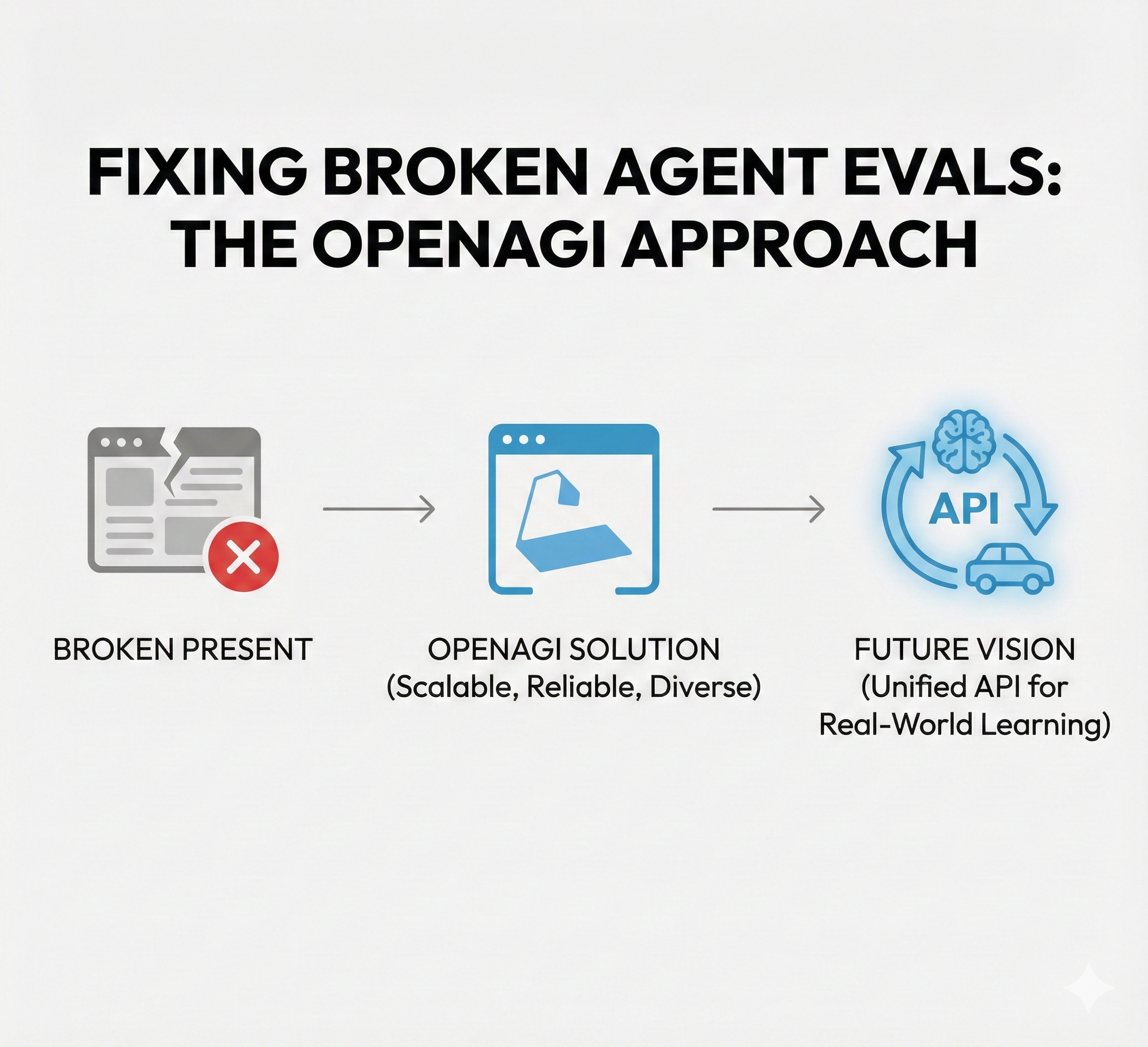
Current agent evals are broken: here is how OpenAGI builds scalable, diverse, and reliable evals for its computer-use models
Most teams evaluate GUI agents in the simplest possible way: run the agent on a set of tasks and report its success rate.
Read Post
Now Is a Great Time to Build Computer Use Agents. Why?
We’ve evolved from the era of the chatbot — where you ask a question and the model reacts — to something more multimodal.
Read Post
Introducing Lux, the State-of-the-Art Foundation Computer-Use Model
The world's best, fastest, and cheapest computer-use model is now available via SDK
Read Post
A computer use love letter to developers
OpenAGI’s Lux - a state-of-the-art computer use model and developer toolkit
Lux is asked to manage communication for the next 2 hours
Check our Enterprise Solutions


Build with Lux, today
Go to Lux SDK

Lux

2025 OpenAGI Labs


Automated enterprise workflows
With Lux, possibilities are endless.
Here are few examples to get you started. Remix, extend, or turn them into something new.


Competitive Market Intelligence
Manual price tracking is too slow for modern markets. Lux autonomously monitors competitor inventory and pricing trends across third-party marketplaces, feeding real-time data into your pricing strategy.
Try now
Autonomous Quality Assurance
Bottlenecks in manual testing slow down deployment. Lux acts as an always-on QA engineer, navigating your application to validate user flows and catch regressions before they reach production.
Try now
Financial Data Aggregation
Research analysts spend hours gathering data from disparate portals. Lux navigates complex financial sites to extract regulatory filings and insider activity, instantly syncing critical risk data to your internal dashboards.
Try now
For Developers
Spin up your first computer use project in 20 minutes
Lux comes in three modes, giving you control over its depth, speed, and style of execution.


Strictly follows step-by-step instructions, with ultra-stable, controllable execution
Tasker


Ideal for immediate tasks, completing actions at near-instant speed
Actor
Understands vague, complex goals, performing hour-long executions
Thinker
Try our developer-friendly SDKs, frameworks, and UX template - all wired into Lux, a state-of-the-art computer use model.
Take me to Lux SDK
Join our Discord
For ENTERPRISE
Deploy Lux across your production workflows
Use Lux to run and manage automated workflows across your organization, with full visibility and control.
Operationalize Lux at Scale
Deploy Lux to automate your internal tools with absolute precision. Cut overhead, eliminate errors, and scale your workflows securely.
View Enterprise Solutions
A new paradigm
Computer Use (noun.)

1. AI’s ability to operate human-facing software - boosting your gameplay, navigating dashboards, entering accurate data - not just through APIs, but also operating computers natively, just as human users do.

2. A paradigm shift in what AI can do - not just generating, reasoning, or researching - but operating on your computer.

3. Once a secret weapon of big labs - now an accessible skillset for developers everywhere.
Blog
Fresh from the lab
Notes, experiments, and strange discoveries while building the most advanced model
Current agent evals are broken: here is how OpenAGI builds scalable, diverse, and reliable evals for its computer-use models
Most teams evaluate GUI agents in the simplest possible way: run the agent on a set of tasks and report its success rate.
Benchmarks such as OSWorld and OnlineMind2Web follow this pattern by asking the agent to complete a long-horizon objective end-to-end, often spanning tens or hundreds of steps.
Read Post
Now Is a Great Time to Build Computer Use Agents. Why?
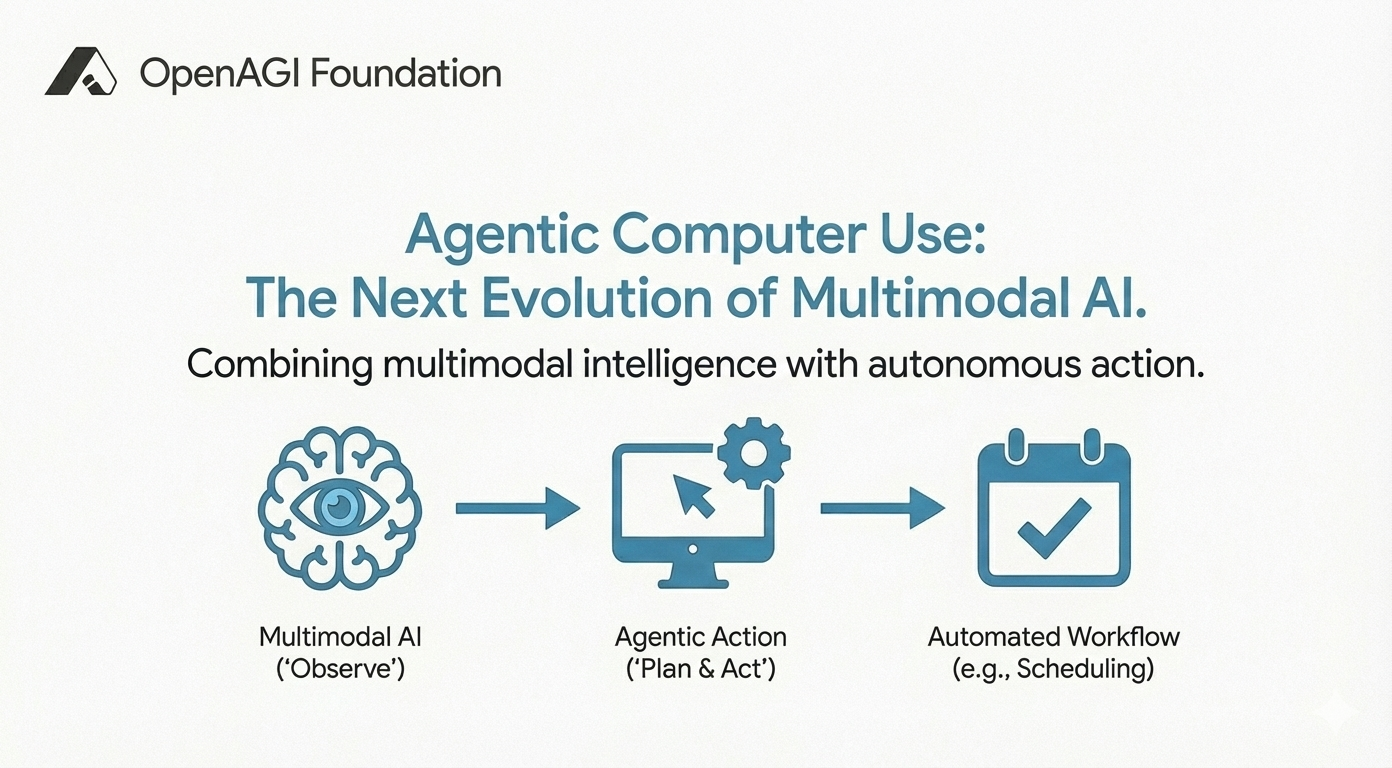
We’ve evolved from the era of the chatbot — where you ask a question and the model reacts — to something more multimodal.
Instead of requiring guidance at every step, the model can now observe what’s happening in the world and begin taking action on its own. The gap today is that while people are training some very good multimodal models — models that can look at an image
and generate answers or descriptions — they’re still not good at two critical things.
Read Post
Introducing Lux, the State-of-the-Art Foundation Computer-Use Model
The world's best, fastest, and cheapest computer-use model is now available via SDK
Our state-of-the-art model achieved a score of 83.6 on the Online-Mind2Web benchmark, which includes over 300 real-world, web-based computer-use tasks, outperforming models from leading AI labs including Google's Gemini CUA (69.0), OpenAI's Operator (61.3), and Anthropic's Claude Sonnet 4 (61.0).
Read Post

A computer use love letter to developers
OpenAGI’s Lux - a state-of-the-art computer use model and developer toolkit
Lux is asked to manage communication for the next 2 hours
Check our Enterprise Solutions